Tag: feels

  • Cahetel Guardian Angel, Born from 26 to 30 April

    Cahetel Guardian Angel administers the energies of the Moon, therefore, although his element is the Earth, he is also an Angel of the Waters. The energy that accords fertilizes expands and advances all that is undertaken. By invoking Cahetel Guardian Angel, people can succeed in everything related to fertility and agriculture, in all professions related to water and navigation.

    As well as in commerce (which is also a lunar field) and in all that comes from these areas. Cahetel is also the Angel of the house and favors everything related to the family and its improvement. It also gives extreme clarity to emotions, to the causes of our feelings of multiple nature, to their origins, to their potential.

    Consequently and by analogy, this Angel is the one who allows us to discover the true feelings that animate the people close to us, as well as to interpret the authentic emotions of the Society. From a spiritual point of view, this angel induces in man a sense of profound gratitude towards the Creator for the natural riches present on the Earth.

    Cahetel Angel Of Prosperity

    Whoever is born under the angelic influence of this angel has harmony and balance between spirit and matter, has maturity and mastery over his self. He has a clear vision and understanding of the world and its laws, having much strength to resist and always to continue.

    Because of his spiritual maturity, he often feels dislocated among friends or family members who have difficulty understanding him. He follows his heart and has great intuition, showing himself humble when he wisely transmits his knowledge and understanding.

    He is not afraid of anything and is always ready to travel and discover new horizons. It can be a pioneer in agricultural production using modern methods and advanced technology. Your land will be your life and your home, knowing how to generously divide your prosperity with those closest to you. Although his success can be attributed to luck, he always thanks God for everything he gets.

    Cahetel Prayer – Prayer of Protection Psalm 94:6 

  • The instinct of children is naturally uncontrolled and wild

    The instinct of children is naturally uncontrolled and wild. It must therefore be contained, be delimited. It must not be trampled on, repressed, or humiliated, but neither should it be left to itself. It needs a limit, a boundary to respect, it needs to be protected even by itself and thus becomes truly free.

    In the beginning, it is the parents who set limits because children do not yet have the ability to decide independently. However, they can begin to explain to him the reason for that limit.

    Explaining, however, implies that the parent is firm and stable and does not let the child cross the line. In fact, children do not support borders by their nature and do everything to challenge or blackmail those who impose them on them. Parents, however, must ensure that this does not happen because overcoming the limit means for the child to remain instinctive in the wild. And losing trust and credibility in the paternal and guiding role of parents.

    The instinct of children must be contained

    If this does not happen, it will also express itself in the following years with aggressive, impetuous, uncontrolled attitudes, increasingly difficult to control. Over time, the child must be taught to choose how to set limits and boundaries for himself. He can choose his times and her ways, but the behavior must be ordered according to a purpose.

    The child must also know the why and the purpose of that habit he is acquiring, she must know what he leads to and what does not follow him entail. Washing, dressing alone, going to school, and doing homework must make sense to him. Things with meaning take on the soul and become vital for oneself and for others.

    Educating to choices, habits, and customs thus become personal and at the same time social. They help the child to feel good about himself and others. And particularly to feel integrated and appropriate to the social context in which he will live.

    To teach your children to give themselves boundaries, it is important that boundaries are also present in parents because children do not only look at what is said or done but mainly at what one is.

    So a parent who still suffers from a lack of understanding of the instinctive needs of his childhood and is still angry at overly strict parents tends to react automatically in the face of imposed limits. Reacting to the limit is like defending oneself from unjust and authoritarian repression.

    This is why he tends to defend himself and also his son from the rules and unconsciously colludes, that is, he takes sides and allies himself with the instinct of the son and with his refusal to be limited.

    In this way, the child feels authorized in his impulses without limit, without order without purpose. He feels protected by those who matter most to him and risks maintaining behaviors that lead to more and more social maladjustment, up to rejection and isolation

  • Anxiety is the emotion that can prevent us from living

    Anxiety is the emotion that can prevent us from living

    Anxiety is an emotion characterized by a feeling of concern about events that could arise in the future and that we may encounter in everyday life.

    Events that cause anxiety

    The family, health, academic or work goals, the economic situation can become sources of chronic concern that start the vicious circle of anxiety with all its consequences.

    Anxiety can be characterized by excessive fear of needles, blood, stings, heights, elevators, dentists, water, animals such as spiders, reptiles or dogs, thunderstorms, closed places, etc. .

    Anxiety can be triggered by activities that we have to carry out in public or under the eye of colleagues, friends, relatives. An exam, a performance, a sports competition, or any other situation that involves the proper performance of a task to be performed in public.

    For example, the disproportionate anxiety of speaking in public. We feel that the world turns a thousand per hour, we tremble, we are nervous and we believe that we will forget everything when others see how ridiculous we are.

    Even normal moments of socialization can lead to anxiety. The anxious person feels nervous, tense and unable to articulate words during their social encounters. Thoughts such as

    • I have nothing interesting to say
    • I can’t talk to anyone
    • They will think that I am a strange person and a failure
    • I don’t deserve nobody cares about me

    The vicious circle of anxiety

    The concern about events that are overestimated in all their characteristics and consequences starts a vicious circle. The anxious person tries to find solutions to deal with the events that worry him, cannot bear uncertainty.

    It constantly reviews all the details and solutions relating to the overestimated event. Since he does not accept margins of uncertainty, he does not want to leave the slightest probability to doubt.

    He can’t help but do it. If he didn’t, he would feel guilty. The brooding becomes so chronic because continuing to think about the worrying event leads to a further overestimation in a vicious circle from which it is difficult to escape.

    The person tries to escape from this situation, to chase it away, but he cannot. Feelings of guilt grow and the event becomes more and more threatening.

    The anxious person engages in incessant work that absorbs many resources and can become incompatible with other jobs. This generates a stress that feeds itself more and more.

    The anxious person must accept that he is suffering from anxiety.

    Instead of trying to suppress it, you have to understand it. The body works well, so anxiety is just a warning that you must pay attention to. Running away is useless. Accepting the situation helps to remedy it.

    Accepting a situation that makes us anxious is not easy. In fact, very often when we think about it, we feel even worse. It is not easy to face our ghosts. But the truth is that there is no other way to overcome them than to face them. To do this, you need to be strong and courageous.

    It means understanding that, at this moment, you are experiencing a feeling of anxiety and that you will probably feel even more anxious during the recovery process. There will be a time when negative thoughts will continue to appear – that’s natural. You just have to learn to accept them for what they are, anxious thoughts and that’s it.

    If we stop giving them the importance and consider them normal, anxiety is reduced. If we consider everyday discomforts normal, discomforts that everyone feels, the biochemical reactions of our body will return to normal.

    Take care of yourself

    You need to get enough sleep, eat properly, exercise, indulge in some hobbies, relax. Dedicate quality time to yourself. You don’t have to be available to others all day. Also, you have to stop working for a few hours. Taking care of yourself allows you to take care of others too because you will be in better conditions to carry out your commitments and responsibilities.

    Living to the full doesn’t have to mean living with an adrenaline rush all day. But enjoy every moment in a conscious way. Succeeding, however, is impossible if your mind and body are not ready. Surround yourself with positive people and things, be kind to yourself and others, and prioritize the things that really matter in life.

  • Empathy, learn to use it to stave off loneliness

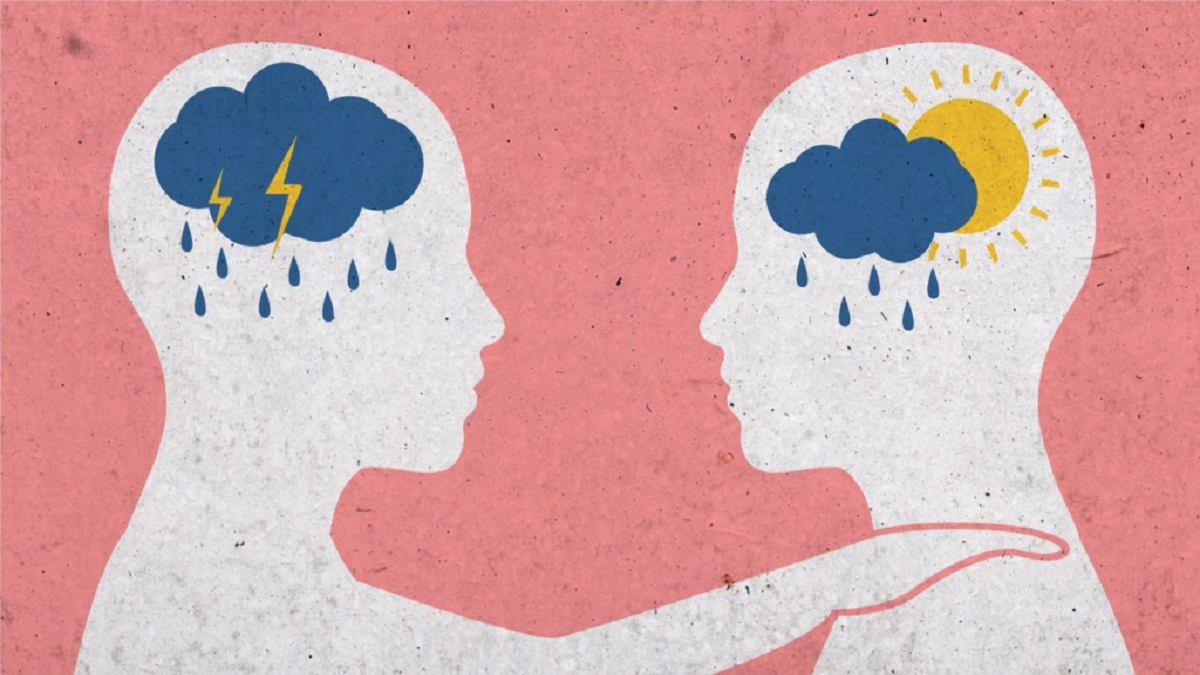
    Empathy, learn to use it to stave off loneliness

    Empathy will save us from loneliness, and perhaps even from the pandemic. Being able to put yourself in the shoes of others, to literally feel what they feel is a quality that makes us human and that can prove to be a winning weapon against isolation. As shown by a study by the University of San Diego in California on seniors living in Assisted Healthcare Residences.

    85 percent of the research participants reported feeling alone, but the extent of the perceived loneliness was very subjective even under the same conditions and social contacts. Those who had griefed, those who did not have sufficient socialization skills, and those who felt lacking in purpose in life felt the burden more. The ability to feel empathy was, on the contrary, protective of the bad thoughts associated with loneliness.

    The elderly who, when they felt alone, reacted by taking care of others, trying to do something for someone whose discomfort they perceived, did not feel as unwell as those who turned in on themselves because they were unable to understand the suffering of others. The key to overcoming loneliness would therefore be to make an effort to pay attention to the needs of those close to us, whoever they are, because this trains and improves social skills and because the connection with others is the exact opposite of loneliness.

    How to develop empathy

    Empathy is certainly an innate ability that can be improved over time, to connect with others more deeply. It is possible to develop greater empathy even in people with autism. This disorder includes interaction deficits, reduced sharing of interests, emotions and feelings.

    Scottish researcher David Jeffrey has provided doctors with some tips for engaging with their patients. Two suggestions are also particularly valid in everyday life.

    1- Paying attention to how the other feels and practicing in assuming the perspective of others means, in effect, imagining that you are the other, taking his perspective totally, considering the specific context, personality and life of the other. that person.

    2 – Meditation, together with creative writing and role-playing, is able to increase empathic abilities. Role-playing consists of playing the part of the person who is suffering, so as to understand them more deeply.

    Empathic abilities can be increased by imagining the story of a real character. Therefore, following the protagonist’s events in person induces you to use a different point of view from your own. Meditation and mindfulness courses can be useful for developing greater contact with one’s own and others’ emotions in a non-judgmental way.