Tag: interpretations

  • The Tarot conceals a mysterious and wonderful world

    The Tarot conceals a mysterious and wonderful world, which has its roots in the collective unconscious. Even if many see in them the survival of foolish, useless, and dangerous superstitions. Tarot cards are much more than a deck of cards for improvised wizards or charlatans ready to steal money from the unfortunate. They are icons, archetypes that speak the language of symbols, recognized by most of us.

    We have become accustomed to the language of words to the point of forgetting that there are other forms of communication, just think of art, which uses images to convey messages. Only through study and considerable effort can we regain possession and learn the secrets, just like a newborn baby takes its first steps into the world of words.

    What is the Tarot

    Tarots are icons, symbols, archetypes that share the nature of sacred images, and various idols. Images that are defined – Arcana – distinguished in Major and Minor. The term – Arcane – in turn, conceals the hidden meaning of – Ark – (custody in Greek). So these are images that must be kept so that they can be transmitted to posterity.

    On the other hand, Tarot cards are also playing cards and as such, they reconcile two different universes, that of magic and the world of play. In fact, the 22 Major Arcana are more mystical, characterized by particular names such as – Death -, – Judgment -, The Moon, etc., the 56 Minor Arcana refer instead to traditional playing cards.

    Why the Tarot is so popular

    Interpreting them would favor the knowledge of oneself, acting on the awakening of ancestral memories and hidden aspects of our personality. Their symbolic language would speak directly to our unconscious, without needing to be filtered by the word. Reading the Tarot and meditating on them would therefore allow us to dialogue with the soul, with our deep self through the language of symbols.

    Those who know how to interpret them correctly know the secrets of non-verbal language, acting as an intermediary between it and the consultant. Ultimately, the Tarot acts on a subliminal level, without our being aware of it, through the images, colors, and emotions they transmit.

    Symbolic meaning

    The psychoanalyst Carl Gustav Jung, who has always been interested in their symbolism, gave them an illuminating interpretation, to say the least, dissecting the deep symbolic meaning, defining them – psychological images, symbols with which one plays, how the unconscious seems to play with its contents. . They combine in certain ways, and the different combinations correspond to the joyful development of events in the history of humanity.

    For Jung, interpreting the Tarot helps us to become familiar with the unconscious, to open a path towards it in order to rise to a new level of awareness. The figure of the Tarot that appears to us, therefore, speaks to our soul and certain reactions and thoughts follow. In this sense, the Tarot creates a bridge between reason and intuition.

    In other words, if I think about a certain sector of my life and a certain card appears to me, it does not come out by chance but it is my unconscious that influences its exit. Because my unconscious already has the answer to that question and sends me the message through the extracted card.

    Which will then be interpreted in solitude or with the help of a mediator or fortune teller. So it is not, as is often thought, the fortune-teller who brings out a Tarot rather than another, but the consultant himself. The Tarot, from this point of view, are real divine messengers. Obviously, the sequence of the cards is also important because it expresses a temporal or logical sequence, for example in some interpretations the first card represents the past, the second the present, the third the future.

  • I Ching ancient system of divination

    I Ching ancient system of divination

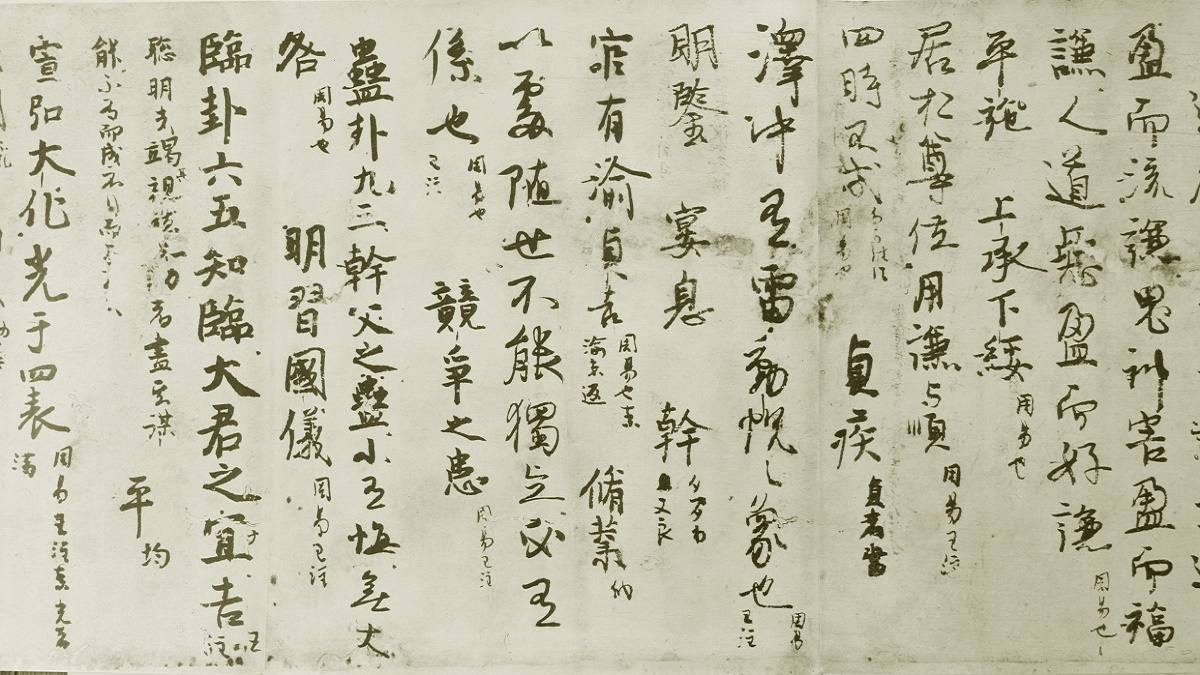
    I Ching, also known as the Book of Changes, is an ancient Chinese system of divination. The first traces of its use date back to the third millennium BC. The well-known psychoanalyst Carl G. Jung considered it an exceptional method of analyzing the subconscious and saw in it numerous points of contact with his theory of synchronicity.

    In the history of divination, the Chinese I Ching occupies a unique place. It is ancient and modern, elementary and sophisticated at the same time. It is a system that has been used in China for thousands of years. The basic technique of the I Ching has much in common with the simpler methods of divination, but in the interpretation the soothsayer is linked by a series of complex philosophical principles.

    While the origin of the hexagrams (the drawings and combinations of the various lines) is unclear, the part of the commentary describing them has been attributed to the legendary figure of the Chinese emperor Fu Hsi.

    The Book of Changes took shape by King Wèn Wang around 1100 BC. and was later modified by his son, Duke of Chou. In the 5th century BC, it was commented by the sage Confucius and it is said that he made use of the system all his life. Confucius is credited with the assertion that the book has as many layers as the earth itself, and many scholars today are ready to testify in favor of the accuracy of this description.

    The Book of Changes remains difficult to interpret even for those who manage to overcome the asperities of philosophical terminology and the difficulty of translating an archaic and multi-layered language. It follows that scholars have interpreted the book in thousands of ways and the great difficulty in understanding the work has contributed to increasing its mysterious attraction.

    Much of the book’s popularity today is due to the enthusiasm of Carl G. Jung, a Swiss psychologist and philosopher, whose analytical psychology system contains the principle of synchronicity or significant coincidence. Jung, speaking of the Book of Changes, declares his permanent interest in – this oracular technique, or method of exploration of the unconscious – and highlights the relationship it has with its principle of synchronicity.

    He says that the use of the I Ching considers the coincidence of events in space and time as signifying something more than mere chance. That is to say that there is a peculiar interdependence of objective events between them and also with the subjective psychic states of the observer.

    The Book of Changes can be consulted in several ways. According to the classic method, 50 stalks of yarrow are divided in various ways, starting by dividing each pile by subtracting small groups of 4 stems from it. But it is too long and complex a process to be described here.

    On the other hand, today’s technique for consulting hexagrams is simpler, it consists in throwing three coins. If there is a preponderance of heads, a Yang line is formed. With a preponderance of crosses a Yin line is formed. This is done six times, forming a hexagram which is then searched for in the I Ching.

    Traditionally, I Chiing serves to enhance the depth of reflection and self-analysis. It can even be used to induce a meditation-like state of consciousness. Experts say that maximum concentration is essential, because the sayings to be interpreted can be obscure.

    For example, the 14th hexagram, ta yu (abundance), says – there will be great progress and success – and – the Superior Man represses evil and distinguishes what is good. The wisdom of the reader and the profound knowledge accumulated over centuries of interpretations say the followers, are the key to a good reading.