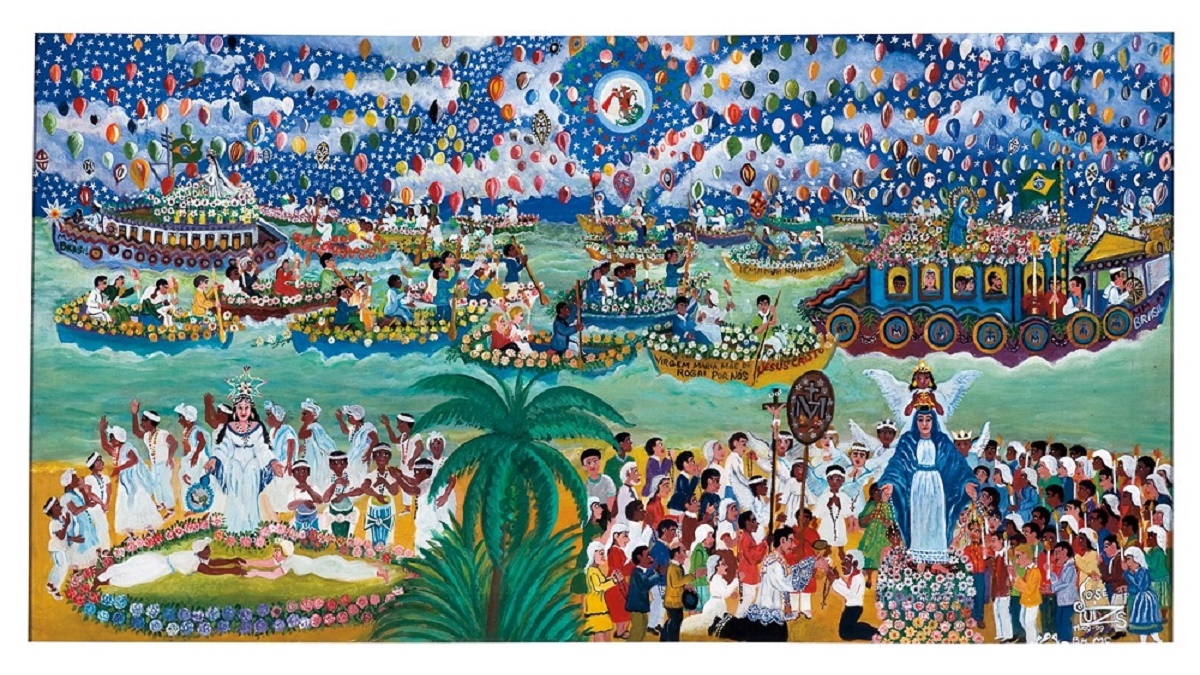
Tag: religious

  • Faith and young people, do-it-yourself religion

    Faith is affected by historical conditioning, situations, and experiences that are lived. Finding and living one’s faith authentically today is certainly very difficult. To arrive at a conscious faith it is necessary to take a path that convinces. Young people today are very interested in the themes of faith, but this is less and less associated with a specific religious affiliation.

    They seek an open dialogue, but too often they do not find it, they seek concrete answers, but too often they have simplistic ones. Young people are not satisfied, they are skeptical, they want credible explanations, they want to know. Faith very often fails to enter young people, despite the fact that young people are predisposed to accept it.

    The strong responsibility of religious institutions is evident, believers who do not identify with a church are clearly increasing and an individual relationship with the divine dimension is increasingly gaining ground. For young people, family educational contexts are also important, but they seem to be less and less disposed towards religion. The latest surveys show how the importance of faith is weakening in the passage from one generation to the next.

    Young people and faith today

    The crisis of faith in recent years has doubled the percentage of young people who say they do not have faith in ecclesiastical institutions and also the majority of religious figures have little consensus. The difficult relationship with the faith is also manifested through the widespread intolerance of young people in the face of the political role played by the ecclesiastical hierarchies.

    This explains on the one hand the growing process of creating opposing groups whose positions for or against are consolidating. On the other hand, the obvious trend for which occasional participation in events and initiatives promoted by religious bodies is increasing, a sign of the emergence of a more individualistic search for the sacred.

    What is faith for young people?

    Many young people respond to this question by emphasizing the value of the faith’s psychological and relational support, as well as its fundamental function of guiding and offering hope. Religion, on the other hand, seems less and less a point of reference for moral doctrine, and in particular, precisely for those aspects on which it insists most in the public debate.

    This confirms how the lack of effective and credible guides in the perception of young people undermines the desire for faith. As already mentioned, a widespread sense of religiosity emerges among young people, but it does not conform to traditional styles. Religion is perceived as an institutionalized system of beliefs, practices, rites, and traditions and young people tend to shy away from anything that appears to be an institution or discipline.

    Young people need a more open and flexible relationship with faith to access it. The individualistic approach also often takes the form of independent reading of the Bible. Perhaps to better understand something that has not been clearly explained, to seek direct answers to their doubts. The fact is that we cannot speak to today’s young people about love, strength, hope, faith if we do not discuss with them the substance hidden behind these great words. In fact, many do not lack the goal, they lack the tools to achieve it.

  • Religious freedom is a kind of heaven on earth

    Religious freedom is a mirage or a kind of heaven on earth. Man has always tried to create a relationship with the absolute, giving different explanations to existential questions. However, these roads collide with each other. Why can’t we live together? Is the problem religious or social?

    The theme of religious freedom, although it starts from the spiritual sphere, is absolutely not resolved in it. Clashes based (or justified) by religious incompatibility are the order of the day. Some of us were born with these clashes going on and who knows if the end will be seen. The problem is far more serious than one might imagine.

    According to some experts, there are 56 countries with a level of at least medium risk for the violation of religious freedom. The improvements that are occasionally glimpsed are mostly the result of local initiatives which, however, fail to expand their range of action at least at the national level.

    To understand what stands in the way of total religious freedom, we can deepen some mechanisms of group psychology. If applied in an absolutist way, they close any opening.

    Religious involvement

    If we leave out all the earthly reasons that lead to a clash between groups, the greatest obstacle to religious freedom is certainly the attitude of believers. What is religious orthodoxy based on? Gerard Lenski identified a fundamental difference between devotionalism and devotional orthodoxy.

    Being devout is based on the feeling of an important private and emotional connection with God, while orthodoxy emphasizes intellectual consent to the theological doctrines of a given religion.

    Starting from this distinction it is possible to reconstruct two ways of participating in the religious group.

    • Associative involvement based on participation in the ritual and institutional activities of a community.
    • The emotional involvement that sees religion more linked to the intimate and personal sphere.

    These two orientations are totally independent and cause opposite behaviors. Those who feel attached to the doctrine will hardly jeopardize it with a different version.

    Affiliation and membership

    Regardless of what the individual seeks in religion and religious groups, there are different methods by which the group seeks the affiliation of believers and grounds their membership in the group. Let’s see 4 perspectives.

    • Charismatic groups, all those who take on religious principles in a total way in daily life and without any adaptation, often make use of extreme persuasive processes. The goal is to bring the whole life of the individual back to participation in the group through control and isolation.
    • The perspective that bases affiliation on granting rewarding answers to the person’s problems.
    • The affiliation that is also formed on the possibility of transforming one’s life. In a particular moment of one’s existence characterized by a need for growth or change, religion becomes an engine of growth. It will be the personal history of the individual that will dictate the direction of this change.
    • The fourth perspective emphasizes the religious practices that a group offers. The simple fact of finding more suitable for our personality pushes us towards one choice rather than another.
  • Syncretism spread thanks to the New Age

    Syncretism spread thanks to the New Age

    For syncretism, it is not important to which creed one belongs, but the actual commitment to inner research. Syncretism is a religious form that mixes doctrines, liturgies, and spiritual practices of different origins.

    By syncretism, we mean the integration or fusion of doctrines of different origins into a new doctrine, both in the sphere of religious beliefs and in that of philosophical conceptions.

    More particularly, in the history of religions, syncretism means the fusion of two or more religions or even the partial contamination of one religion with elements of others.

    However, the term syncretism has spread in modern times thanks above all to the New Age movement, which attributes a particular meaning to syncretism.

    New Age and syncretism

    In fact, the New Age doctrine represents a form of religious syncretism because it mixes elements of various origins. It takes up elements of Eastern wisdom – Buddhism, Hinduism, Yoga -, of the esotericisms of the Western tradition – theosophy, anthroposophy, occultism – of Christianity and of the religions of the primitives – shamanism, animism, magic.

    In this vision, God is real, exists, and is part of nature and man. God is seen as an energy that permeates all things – the sum of the consciousness existing in the universe. Man’s transformation lies in learning to recognize divine energy in oneself and in nature.

    For the New Age, the best part of any religion is its esoteric, secret, and mysterious side. At the same time, the more modern meaning of syncretism simply indicates that the substratum of all religions is unique.

    For the effects of syncretism it is therefore not important to which creed one belongs, but the actual commitment to the inner search within the religion or doctrine in which one is established, by choice or culture.

    Religious s yncretism affirms the substantial unity of all faiths and schools of thought, beyond dogmas and formal and external differences.

    According to the syncretistic view, the founding concepts and principles of every creed – such as the fatherhood of God and the brotherhood of men, the value and importance of prayer, universal love, etc. – are the only and the same.

  • Prosperity theology teaches that God wants us to win

    Prosperity theology teaches that God wants us to win

    Prosperity theology teaches that God wants us to win, Always. A certain false idea of ​​Christianity has accustomed us to despise money. The Theology of Prosperity, of Protestant origin, is of the opposite opinion. Prosperity Theology teaches that everyone has the right to economic well-being because physical and spiritual reality are seen as inseparable.

    It is not bad to ask God for money and prosperity. A doctrine in contrast with Christian churches which teach a false concept of poverty. Poverty is actually the detachment of the heart from material things, not misery and mediocrity. If a man or a woman is successful – they earn very well and with this money they employ others and do good – God is very happy with that.

    He only waits for those who have faith and ask Him the same thing to fill him with his favor and open doors for him that are impossible for men. Money is just a medium that amplifies what the person already is. With a lot of money you can give work to others, you can carry out projects that are useful to millions of people, you can set up philanthropic foundations, research centers and universities, set up university faculties, etc.

    According to a new study by an American social research institute, there is a relationship between personal economic well-being and religious faith. Wealth and religion would be inversely proportional.

    The more religious countries are those with a higher rate of poverty and vice versa, while the richer ones are more prone to atheism. The only exception is the United States of America, where despite the high wealth, 54% of the population affirms the great importance of religion in their lives.

    In the sociological text – Sacred and popular. Religion and politics in the globalized world – the authors point out that participation in religious practices records higher rates among people who are more uncertain economically and who face more health and poverty problems.

    In the general hypothesis, the decline in the value of religion, faith, and religious activities depends on the long-term change in existential security. With the process and progress of human development, the importance of religion in the life of individuals gradually decreases.