Category: Personal Growth

  • Bad thoughts 4 steps to learn how to master them

    Bad thoughts 4 steps to learn how to master them

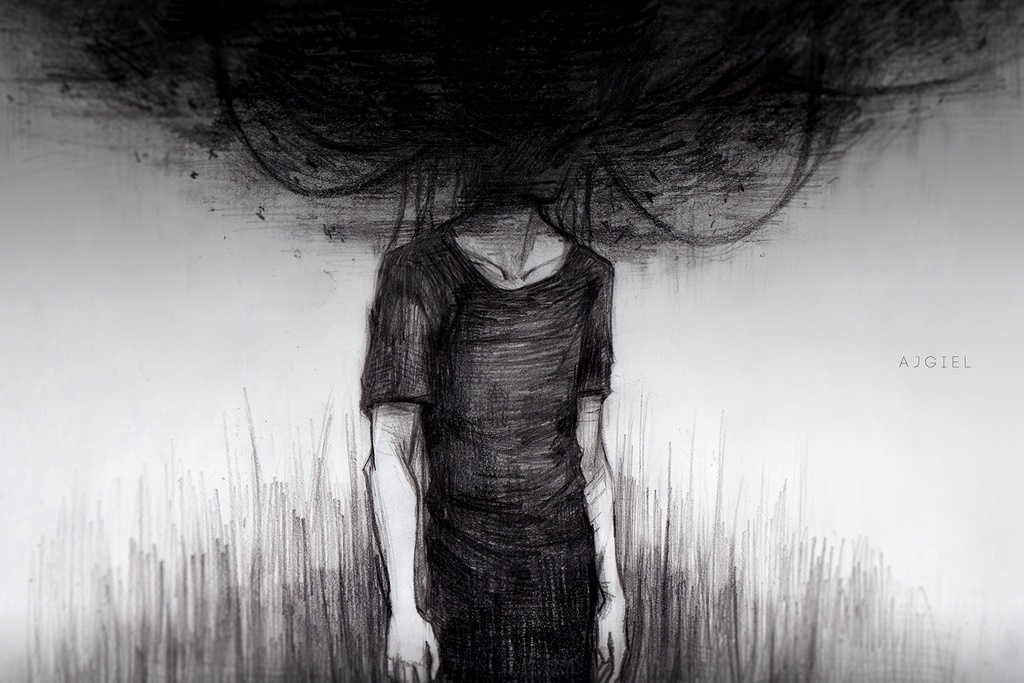
    Bad thoughts steal important energy from our minds, reducing serenity and well-being. Very often our mind is pervaded by bad thoughts that occupy a large part of our daily activity, taking away energy and resources that we could use in other things. Learning to control and banish bad thoughts is certainly useful for reducing the stress generated by them and improving the quality of life.

    Bad Thoughts First step – acceptance

    The most common reaction to bad thoughts is repression. However, many types of research show that the higher the efforts to push a thought away, the more the thought feeds and grows. This happens because our attention is focused on that thought and therefore the resources will be concentrated on it and taken away from something else. The first step is therefore to accept the negative thought and make it your own and not judge it.

    Acceptance allows you to perceive these thoughts as something belonging to oneself, which must not be cast out but welcomed, understood, and accepted. This first step allows you to reduce the energy used in the hard struggle to distance yourself and gives the thought a less annoying and more acceptable aspect and therefore a greater chance of dealing with it.

    Bad Thoughts Step Two – Observe bad thinking in a non-judgmental way

    The second step is the observation of thought from the outside. You have to become spectators of your own thought and observe it in its individual parts. Understanding its nature, possible causes, and factors trying to move away from these in the future. Understanding its evolution, what feeds it, and its validity and influence on our actions. Meditation helps to welcome thought, take a non-judgmental attitude towards it and therefore reduce its strength and increase its understanding.

    The basic concept is that it is a thought and as such generated by my mind and therefore controllable and addressable by it. Do not judge your own thought, because it is part of us and produced by ourselves. Therefore, assuming an excessively critical and derogatory behavior could also have effects on one’s self-esteem and sense of effectiveness, undermining serenity and well-being.

    Bad Thoughts Third step – get distracted

    If trying to get rid of it is not much use, it is useful instead to direct your mind towards something else. The distraction allows you to direct mental energies and attentional focus towards something different. Better if pleasant and very engaging, removing them from negative thinking, which loses strength and vigor. Distraction accompanied by a motor gesture or action is more effective. Because it increases the general level of bodily activation, requiring more resources that are taken away by the continuous brooding on the negative.

    Bad Thoughts Fourth step – deal with the thought

    Another important step is to deal with negative thinking. It would be optimal to postpone this action to a specific time of day, in which you can safely reflect and invest energy, without other worries or distracting sources. Dedicating a specific moment to this action also allows you to reduce stress during the day. In dealing with it, it is important to understand whether it is founded or not, whether it is useful or not, the consequences on one’s well-being and serenity and to find an alternative, more effective, and functional thought.

    In a simple way, it is a reconstruction of thought so that it is useful, perhaps activating action and positive change. Planning one’s action in the face of negative thoughts, reducing their strength and influence in the future allows one not to be caught unprepared and act promptly. It is important to remember that where thoughts become excessively invasive and strong, it is important to ask for help and perhaps rely on specialists to help you in this process of restructuring your thinking and rediscovering serenity and positivity.

  • Charity is the greatest of all virtues

    Charity is the greatest of all virtues

    For many, charity is an action that ends with alms. There is no doubt that every good action of giving towards the other is meritorious. But for Christianity, the charity has a much higher value and must be practiced in a form that goes beyond giving.

    For the Christian religion, charity is linked to love, to the taking of total responsibility towards the other, and implies behavior of close brotherhood. Perhaps for this reason St. Paul indicated charity as the greatest of all virtues.

    What is charity?

    Charity is the very identity of God. This is what we learn from the first letter of the apostle John – God is love – 1 Jn 4:16, in this passage the Apostle uses the Greek term agape, which means love free of benevolence.

    The charity also means the love with which God loves each of us This is the meaning of the prayer that Jesus addresses to the Father before his arrest (Jn 17:26) – The love with which you have loved me be in them and I in them -. Charity means the love with which we love God, ourselves, and others. Therefore, a love of response, a love of result that depends on the fact that God is love and that God loves us.

    What distinguishes Christian charity from the concept of solidarity

    The characteristic element that makes the difference is the origin, the source, and the awareness of this origin. Charity is the very nature of God, it is the fact that God loves me with the love with which he loves himself. And precisely because God loves me and involves me in his dynamism of love, then I am made capable of loving with his own love of him: this is Christian charity.

    A kind of enabling, of empowerment that God works in us. By loving us, Jesus Christ makes us capable of loving in turn with his heart and his enthusiasm, with his motivations and his goals. This is the plan of salvation in which every man and woman is called to actively enter: a plan of salvific love that is realized with love that becomes an offering of oneself.

    Therefore, charity finds its origin in God himself and conforms us to the life of Christ. Solidarity, altruism, generic benevolence are good dispositions of the human soul. They are virtues and as such they are appreciable, they can lead to the same gestures that charity can lead to. But the origin and goal of solidarity, altruism, and generic benevolence are different from the origin and goal of charit y.

    In fact, solidarity arises from the awareness of belonging to the same community and having common interests and purposes. While charity has God himself as to its goal, that is, to participate in his own life of love and happiness, human solidarity has as its goal a more immediate reality, mutual help.

    Classical theology briefly teaches that the formal reason for charity is God himself. That is, the awareness and gratitude of being loved by God and the will to correspond to so much love, while the formal reason for solidarity or altruism is the awareness of having something in common with the loved one.

  • Prosperity theology teaches that God wants us to win

    Prosperity theology teaches that God wants us to win

    Prosperity theology teaches that God wants us to win, Always. A certain false idea of ​​Christianity has accustomed us to despise money. The Theology of Prosperity, of Protestant origin, is of the opposite opinion. Prosperity Theology teaches that everyone has the right to economic well-being because physical and spiritual reality are seen as inseparable.

    It is not bad to ask God for money and prosperity. A doctrine in contrast with Christian churches which teach a false concept of poverty. Poverty is actually the detachment of the heart from material things, not misery and mediocrity. If a man or a woman is successful – they earn very well and with this money they employ others and do good – God is very happy with that.

    He only waits for those who have faith and ask Him the same thing to fill him with his favor and open doors for him that are impossible for men. Money is just a medium that amplifies what the person already is. With a lot of money you can give work to others, you can carry out projects that are useful to millions of people, you can set up philanthropic foundations, research centers and universities, set up university faculties, etc.

    According to a new study by an American social research institute, there is a relationship between personal economic well-being and religious faith. Wealth and religion would be inversely proportional.

    The more religious countries are those with a higher rate of poverty and vice versa, while the richer ones are more prone to atheism. The only exception is the United States of America, where despite the high wealth, 54% of the population affirms the great importance of religion in their lives.

    In the sociological text – Sacred and popular. Religion and politics in the globalized world – the authors point out that participation in religious practices records higher rates among people who are more uncertain economically and who face more health and poverty problems.

    In the general hypothesis, the decline in the value of religion, faith, and religious activities depends on the long-term change in existential security. With the process and progress of human development, the importance of religion in the life of individuals gradually decreases.

  • The inner darkness is stronger than any light

    The inner darkness is stronger than any light

    The inner darkness is stronger than any light, any sprout of hope. It is easy to be happy when things go well, we hardly fall into the dark valley of despair from which the fog of depression often arises. Until we are personally touched by some event that scratches our certainties and questions the foundations of our existence.

    We must avoid judging the behavior of those who cannot go ahead and support them with strength and determination so that they can grasp that ray of light that indicates the way out of the black tunnel in which they find themselves. There are also nights of the soul on the way to true freedom. Nights in which the inner darkness is stronger than any light, any call, any sprout of hope.

    Nights in which you feel swallowed by a bottomless chasm of anguish. Nights in which there is no place, person, or prayer capable of placating the boiling bubbling of inner torment. These are the darkest nights, the most entangled with thorns of anxiety, the most terrible to endure, where the temptation to close the door on life becomes very strong.

    And there is not a breeze of peace, a ray of hope, a sigh of resignation, there is really nothing that can appease this increasingly acute, more penetrating, sharper torment. These are the nights of the soul. These are the nights where that deaf yet so acute cry of despair rises – But what’s the point of living?

    And then drag your heavy body from one place to another, pretend to smile, no longer even have the strength to rebel while one day never ends. It is important, in these moments, to know how to choose the right people and the most suitable tools to cross this inner desert.

    The inner darkness of depression is an evil that oppresses and blurs the vision of the future. When the rays of hope do not come in this darkness, living becomes an unbearable burden. Yet, there is an extraordinary inner strength within us, the ability to remain standing even when everything tells us we should collapse like exhausted boxers.

    Prayer to defeat the inner darkness

    There are many testimonies of men and women who have been able to resist storms and who have taught us not to give in, to go further, to believe in the beauty of life and to cling to strong values ​​in order not to resign themselves to the jaws of pain, of injustice, trauma or loss. It becomes essential to know how to activate this inner strength.

    I believe that spirituality has a fundamental role in these difficult moments because a soul that has grown every day on a journey of faith is more ready to face the days of pain. There is a prayer that personally supports and reassures me. I hope that for some of you it can be a source of inspiration to face the nights of the soul with greater strength and serenity.

    God is my rock
    God is my salvation
    God is my anchor.
    God is everything to me.
    I will not let myself drown in despair, because you, my God, are my Father, the One who wants to save me and who wants to heal me from the evil that grips me inside.
    God, it doesn’t matter if I don’t feel anything, because I know that you are a faithful God, a God who supports me even when I don’t feel it. And with this prayer that I close my eyes, I offer you my pain and my hand to walk with you.

  • Fear crushes us but faith elevates us

    Fear crushes us but faith elevates us

    Fear crushes us when we are haunted by the shadows of the past and the gray clouds of pessimism and resignation darken the golden fields of wheat. Instead of starting to run like free people towards the sun, we hide behind the boulders of our fears. Every day we can decide to look at reality in a positive or negative way.

    Life calls us by name and invites us to assume a position of trust or mistrust, of pessimism or optimism, of despair or hope. Based on our attitude we will have different visions on how to deal with the past, the present, and the future.

    The Old Testament tells the story of the Jewish people who under the guidance of Moses begin a journey towards the Promised Land, a symbol of peace, joy, and freedom. Upon leaving Egypt, the children of Israel began a fascinating journey, full of challenges and adventures towards the land that God had promised the patriarchs.

    After various incredible experiences, the passage of the Red Sea, the Sinai alliance, they arrived at Kades, the gateway to Canaan. Here Moses decided to send good news from the land of hope to encourage the people now tired and oppressed by monotony.

    As leaders he chose twelve brave and intelligent men, to bring back objective and truthful information from the earth that was presented to them as a challenge. Going into exploration, he instructed them to scrupulously observe every detail, to realistically analyze the data, both positive and negative.

    After 40 days they returned from exploring the country and went to see Moses, Aaron, and the whole community of the Israelites. They returned carrying information of opposite sign, double in aspect as life itself or as a symphony that knows the high tones and the low tones.

    Ten of them reported that it was impossible to access this land full of pitfalls and unbeatable enemies. Two of them, on the contrary, spoke with enthusiasm of this new country, bearing the fruits and describing the beauty of the places.

    Caleb, representative of the Tribe of Judah, calming the people who murmured against Moses said – Let’s go quickly and conquer the country because it is certain we can succeed. But how did the multitude of the Jewish people react? With the attitude of fear that led them to exclaim – We will not be able to go against this people because they are stronger than us -.

    These words of the people indicate the inability to free themselves from the conditioning of the past (years of slavery) and therefore to measure their real strength. This is a bit like what happens to us when we remain prisoners of wounds or negative experiences that have clipped the wings of courage and self-confidence.

    Many times fear overwhelms us and prevents us from making those courageous choices that give full fulfillment to the realization of the Happiness Project. When we are haunted by the fears of the shadows of our past the gray clouds of pessimism and resignation darken the golden fields of wheat and instead of starting to run like free people towards the sun, we hide behind the boulders of our fears.

    But when we rediscover the power of faith in our resources, in the talents present in us, in the ability to learn, to heal, to improve, and in the strength of life. We become capable of undertakings that are impossible for those who find themselves in the shadow of their fears since fear crushes us, faith elevates us.

  • Self-esteem is a light that does not leave us in the dark

    Self-esteem is a light that does not leave us in the dark

    Self-esteem is a light that does not leave us in the dark. Thanks to it, it is possible to find the way home where serenity, harmony, and trust in life live. Human growth is inherent in our nature, as for an acorn to become a tree. The human being is like a fountain that releases vital energy from every cell.

    If in the course of existence there are traumas, dysfunctional environments, or ill relationships, limestone settles, preventing the fountain from expressing itself in a harmonious and balanced way. There are people who have over-developed cognitive functions to the detriment of effective ones.

    Every time we block a part of us, we generate a compensation mechanism that unbalances the proper functioning of the various dimensions of which we are composed. One of the fundamental elements for healthy growth is self-esteem.

    Self-esteem represents the value that a person gives to himself and being able to not depend on the approval of others. Those who achieve solid self-esteem can relate starting from a position of equal dignity. Therefore he does not need to submit or hide for fear of being rejected when he expresses the real nature of his feelings and thoughts about her. Furthermore, self-esteem is like a shield that protects from the ignorance and wickedness of others.

    In reality, having high self-esteem does not protect life from suffering, injustice, and unhealthy situations, but allows you to stand up or get up quickly because there is a reservoir of confidence in your potential. Self-esteem is like an anti-limestone that restores vitality and balance at various levels – personal, relational, social, and in family life, as a couple, and children’s education.

    A family without self-esteem is at risk for the simple reason that any communication exchange can cause hurt, misunderstanding and a sense of personal threat. It is no coincidence that it is precisely during adolescence that the tension between parents and children skyrockets.

    Both a child and a parent feel rejected, not understood, opposed or provoked by the behavior of others in a communicative circularity that becomes more and more dysfunctional over time.

    This is why it is important to work on the sense of personal self-esteem and of the people close to us. Self-esteem is like a lantern that never leaves us in the dark. Thanks to it, it is possible to find the way home where serenity, harmony and trust in life live.

  • Today is a gift, yesterday is history, tomorrow is a mystery

    Today is a gift, yesterday is history, tomorrow is a mystery

    Today it is a gift, our body is constantly living here and now. If you feel hungry it is today and not in the past or in the future. Our body does not live on feelings of guilt or mental brooding but on constant feedback that is updated every second. If we stumble and hit the knees, the body reacts instantly, providing a very rapid mechanism for repairing the damage.

    We should learn from our body how to conduct our existence which often hangs between looking back or running forward. This does not mean that the past does not have its own value and that the future does not have to be imagined or planned. The past is the sum of all the experiences lived, while the future represents the new paths to follow.

    Today is a gift we learn from past mistakes

    Walking always looking backward prevents us from grasping new horizons and can plunge us into the valley of regrets. Walking forgetting where we put our steps can make us fall into the chasms of illusions and dispersive reveries. If we learn from the mistakes of the past and listen to the voices of the different experiences we have lived we will be able to collect many lessons to be spent in the awareness of the here and now.

    If we listen to the part of the deep conscience, where the most intimate aspirations reside, we can begin to design a self-realization project to be implemented with strong desire and determination here and now.

    When past and present meet, embrace, exchange emotions, thoughts, and information, and communicate with each other, our psychic apparatus becomes full of energy, vitality, passion, and enthusiasm. It is in this way that we can choose what makes us grow and feel at the center of ourselves and in harmony with life. And the journey continues.

  • Evil eye how to defend yourself with Prayer

    Evil eye how to defend yourself with Prayer

    The Evil Eye is a topic that often arouses heated debates between those who believe in it blindly and those who think it is just superstitions from past centuries. In case you think you are the object of a curse there are countermeasures to be implemented to defend yourself from the effects of the evil eye and misfortunes.

    For anyone who believes in the real effectiveness of the evil eye and curses, it is natural to wonder if there is a method to defend oneself from the evil effects caused by the evil eye and misfortunes. Can you defend yourself without resorting to the intervention of an expert? Generally, insiders argue that the intervention is inevitable and necessary.

    However, an attitude can be taken that facilitates the expert’s work or at least partially prevents any attacks. Here are several tips to give life to a form of defense and prevention against evil.

    The defense against evil comprises three stages

    Arrange the mind in an attitude of extreme cleanliness, that is, to remove rancor, jealousy, hatred, envy and gossip, refraining from eating meat and remaining silent.

    Increase spiritual strength by forgiving all enemies, doing works of charity, and praying continuously.

    Using physical means such as coal which is a powerful isolator of the astral. Coal can be placed under the bed. What is important is to put it in the garbage the following day.

    The steel points, such as hooks, knives, needles, or others are powerful insulators with which we can deflect the evil forces unleashed against us. It is therefore sufficient to surround yourself with metal spikes in the places where we sleep and live. It is also very important to collect flowers and plants on the roadsides and take them to where we live.

    Another method that can give good results is to incense the photograph of the person twice a day, at the quarter of the crescent moon, surrounding them with perfumes. It is not incensed during the period of the waning quarter moon, except on Sundays, when, however, it is necessary to incense throughout the day.

    Then there is the method of exorcism, often considered the best. You take a container, fill it with spring water and throw three handfuls of common salt into the water, saying – I exorcise you, oh creature, go out in the name of the Father, of the Son, and in the name of the Holy Spirit. Amen.

    The four points of the house, which correspond to the four cardinal points, are then sprayed with a frond of spikes. In each of these points the following prayer should be recited – Bless Lord, Almighty God, this house so that in it there may always be health, victory, and prosperous fate. So we give thanks to God the Father, God the Son, and God the Holy Spirit. Amen. May this blessing remain on this home and on those who live in it, now and forever. Amen Amen Amen.

  • I Ching ancient system of divination

    I Ching ancient system of divination

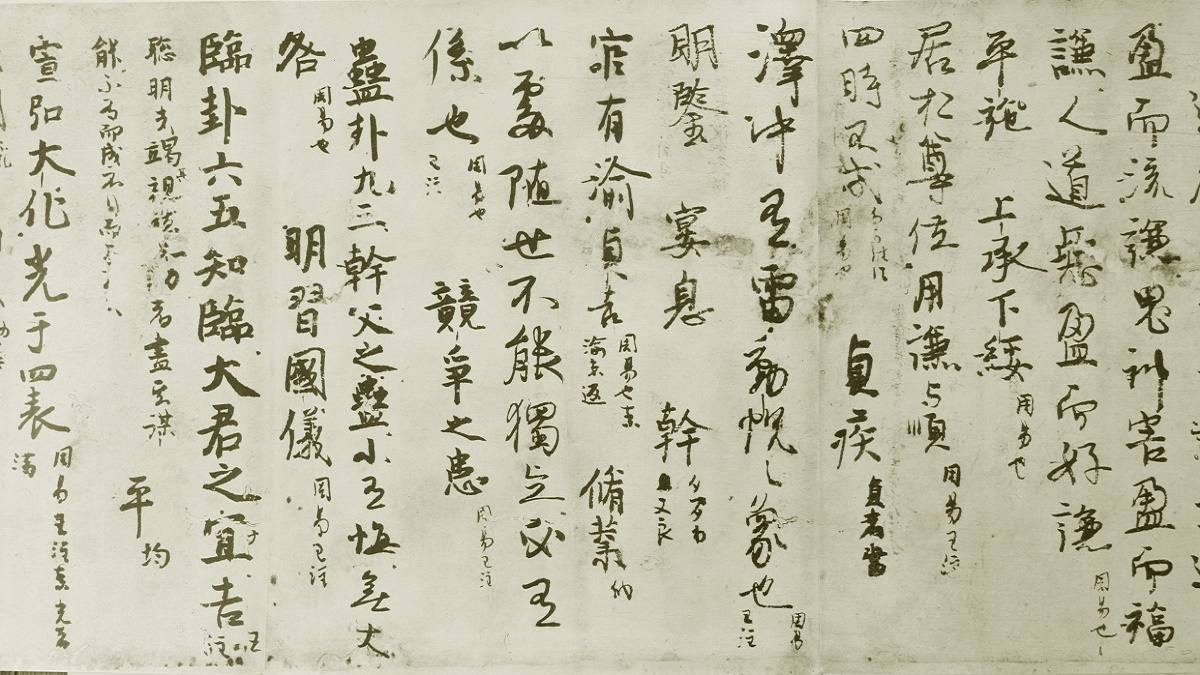
    I Ching, also known as the Book of Changes, is an ancient Chinese system of divination. The first traces of its use date back to the third millennium BC. The well-known psychoanalyst Carl G. Jung considered it an exceptional method of analyzing the subconscious and saw in it numerous points of contact with his theory of synchronicity.

    In the history of divination, the Chinese I Ching occupies a unique place. It is ancient and modern, elementary and sophisticated at the same time. It is a system that has been used in China for thousands of years. The basic technique of the I Ching has much in common with the simpler methods of divination, but in the interpretation the soothsayer is linked by a series of complex philosophical principles.

    While the origin of the hexagrams (the drawings and combinations of the various lines) is unclear, the part of the commentary describing them has been attributed to the legendary figure of the Chinese emperor Fu Hsi.

    The Book of Changes took shape by King Wèn Wang around 1100 BC. and was later modified by his son, Duke of Chou. In the 5th century BC, it was commented by the sage Confucius and it is said that he made use of the system all his life. Confucius is credited with the assertion that the book has as many layers as the earth itself, and many scholars today are ready to testify in favor of the accuracy of this description.

    The Book of Changes remains difficult to interpret even for those who manage to overcome the asperities of philosophical terminology and the difficulty of translating an archaic and multi-layered language. It follows that scholars have interpreted the book in thousands of ways and the great difficulty in understanding the work has contributed to increasing its mysterious attraction.

    Much of the book’s popularity today is due to the enthusiasm of Carl G. Jung, a Swiss psychologist and philosopher, whose analytical psychology system contains the principle of synchronicity or significant coincidence. Jung, speaking of the Book of Changes, declares his permanent interest in – this oracular technique, or method of exploration of the unconscious – and highlights the relationship it has with its principle of synchronicity.

    He says that the use of the I Ching considers the coincidence of events in space and time as signifying something more than mere chance. That is to say that there is a peculiar interdependence of objective events between them and also with the subjective psychic states of the observer.

    The Book of Changes can be consulted in several ways. According to the classic method, 50 stalks of yarrow are divided in various ways, starting by dividing each pile by subtracting small groups of 4 stems from it. But it is too long and complex a process to be described here.

    On the other hand, today’s technique for consulting hexagrams is simpler, it consists in throwing three coins. If there is a preponderance of heads, a Yang line is formed. With a preponderance of crosses a Yin line is formed. This is done six times, forming a hexagram which is then searched for in the I Ching.

    Traditionally, I Chiing serves to enhance the depth of reflection and self-analysis. It can even be used to induce a meditation-like state of consciousness. Experts say that maximum concentration is essential, because the sayings to be interpreted can be obscure.

    For example, the 14th hexagram, ta yu (abundance), says – there will be great progress and success – and – the Superior Man represses evil and distinguishes what is good. The wisdom of the reader and the profound knowledge accumulated over centuries of interpretations say the followers, are the key to a good reading.

  • Man is a microcosm, an exact image of the macrocosm

    Man is a microcosm, an exact image of the macrocosm

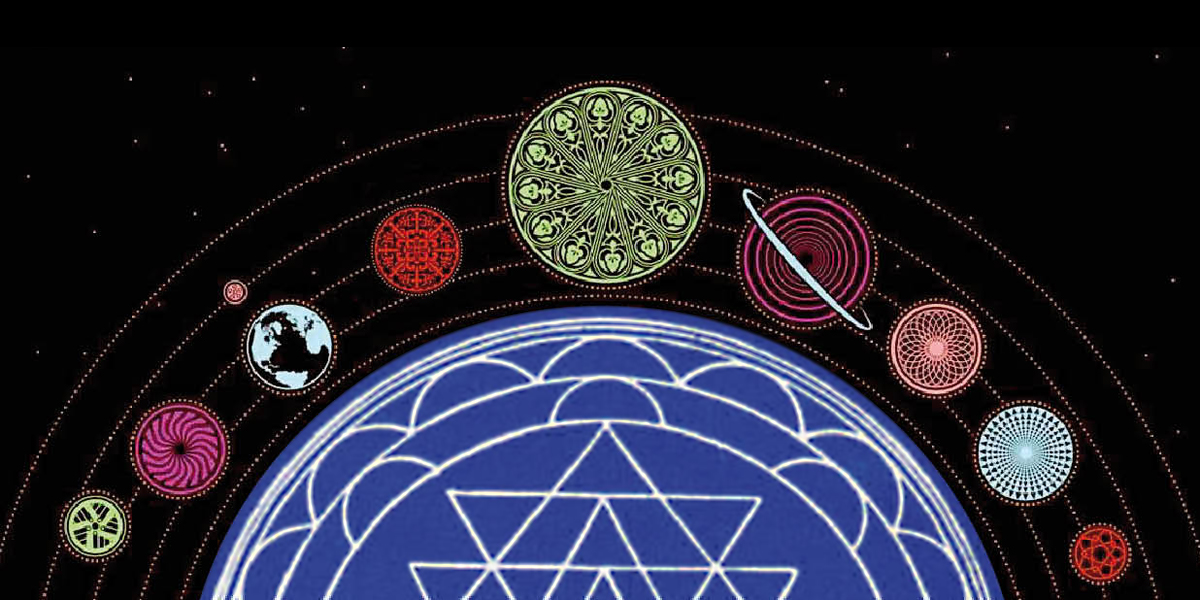
    Man is a microcosm and consequently an exact image of the macrocosm in which it is reflected. The law of resonance states that everything that becomes part of our lives is simply the testimony of the existence of a similar circumstance in our thinking. Objective reality is understood as a mirror of one’s inner world that allows us to highlight the anxieties and fears of our unconscious.

    For every perception, man needs in himself a correspondence capable of vibrating in unison and therefore transmitting perception to him through resonance. Goethe expressed this concept by stating – If the eye were not solar, it could never stare at the sun and if the power of God was not already present in us, how could we be ecstatic for the Divine?

    Each person can perceive only those aspects of reality for which he possesses resonance capacity. This applies to the purely sensory field of perception, and also to the perception of reality in its entirety. If a person reads a book, he thinks he understands it completely, although of what he reads he can only perceive what is in harmony with his state of consciousness of the moment.

    That this is how things are can be understood when you reread certain books after years. Consciousness in the meantime has expanded and often the content of the book is received much better than in previous readings.

    We can only come into contact with the ideas, people and situations for which we resonate. Without an adequate affinity, it will never be possible to reach a manifestation in the external world. If you find yourself involved in an unpleasant situation, this never happens casually but always on the basis of your affinity with similar experiences.

    The so-called external world is actually a mirror in which everyone lives himself. He will never be able to see something other than himself, as from the objective reality that is the same for everyone, he filters only what he personally has an affinity for. Those who are not aware of this mechanism often end up committing behavior errors that lead them to experience long chains of adverse events.

    The law of resonance naturally holds both in a positive and negative sense. If man realizes that the external world is nothing more than the mirror of his inner world, he instantly procures an unsuspected source of information. Through it you have the opportunity to see aspects of your soul that alternatively it would not be possible to perceive in any way.

    Man is a microcosm

    The more aware a man becomes, the more he learns to put things in order, to ask himself what information they can provide. The law of resonance states that man is a microcosm and consequently an exact image of the macrocosm in which it is reflected. Everything that is perceived on the outside can be found without a shadow of a doubt also on the inside.

    If their thoughts are not in harmony with the different aspects of reality, then their counterparts in the external objective world will have the possibility to interfere in the daily experiences of life, bringing confusion and disturbance. If something unpleasant happens, it is necessary to consider this circumstance as a solicitation to change one’s thinking, overcoming fears and often self-imposed limits.