Category: Personal Growth

  • Laziness hides the desire to escape from reality

    Laziness hides the desire to escape from reality

    Laziness is a lack of determination in carrying out an action and can affect anyone. Even if it is not socially well accepted, it can be useful at times. Especially when in front of us there is a heavy task and our resources are objectively few. In this case, laziness is activated to prevent us from uselessly wasting our energies and putting us in an uncomfortable condition.

    Other times laziness can hide neurotic behavior, a fanatical search for perfection, an inner conflict so strong that it leads to paralysis.

    Laziness serves to save energy

    At the base, laziness is a survival mechanism, if our glucose supplies are insufficient, the brain will tell us to stop. To avoid finding yourself in a situation of scarcity that could upset the balance and good functioning of the entire body.

    For example, imagine our nomadic ancestors who lived through periods of even prolonged famine. Instead of hunting day and night without the certainty of finding food, it was more efficient to wait and save their strength until they were sure they would find some animals to hunt. This energy-saving function remained anchored in us as it promoted the survival of the species.

    While it originally had a useful function, it is also true that times have changed and now laziness often hides more than a momentary weakness or a shortage of resources. It often masks a fear, acts as a loophole, becomes a way out for not acting, for not taking certain responsibilities, for escaping from reality.

    Laziness can hide the fear of failure

    Only those who do nothing are never wrong – but they waste their life. Laziness can mask a fear of failing or making mistakes. Let’s think of the worst scenario that could happen to us if we got to work and often our script is so convincing that we don’t even begin.

    Laziness sometimes hides a perfectionism so extreme as to prefer the sterility of inaction to vital movement. If ultimate perfection becomes an obsession, a neurosis, then human action is considered by its nature as fallible and therefore useless.

    It should be borne in mind that perfection is not of this world. It may remain an ideal towards which to move our attempts but we must remember that even if it can direct us, it will always remain out of our reach. That’s why it’s important to learn how to enjoy the ride.

    Our life already has a meaning now, it won’t have more of it when we have reached our goal according to our illusory parameters imbued with fanatical perfectionism. Better to live making mistakes than to wait for perfection and die without having lived.

    Laziness which indicates the conflict between duty and will

    Sometimes laziness is the consequence of an inner conflict between what we know we should do and what we would like to do. You can’t make up your mind and get stuck between the two, in an anxious situation that steals our energy and empties us internally.

    In this case it is not a question of lack of willpower, because the willpower in doing is equal to the displeasure in performing an action that we do not like. And since the sum of two forces of equal intensity going in opposite directions is zero, you don’t go anywhere and get stuck in total apathy without knowing what to do.

    It is not a question of serene inactivity but of an external paralysis that hides an extremely strong inner tension. Within us, anxiety increases until it leads to psychosomatic disorders – insomnia, migraines, stomach ache, inexplicable fatigue, etc. In this case, it is necessary to study carefully what is blocking us and find a compromise, a meeting ground between duty and pleasure to get out of the stalemate.

    When laziness becomes a refuge

    Laziness is able to feed itself, the less we do, the less we want to do. We feel tired without doing anything and boredom sticks to our days like chewing gum thrown on the sidewalk.

    If we follow this trail, we will end up sinking into a limbo, gray and gloomy, with the danger of never leaving it. The question is, what drives us to remain imprisoned in that limbo? Often the reason behind that vicious circle is a desire to escape from a reality that we do not like or from which we have little hope of getting out, so we build an intermediate, illusory world that requires little effort.

    At the cost of sacrificing part of our life in order to feel safe from the pain, it could cause us, according to our vision of things. We prefer to hide under the sheets instead of going to open the door to life knocking out.

  • Death the natural limit to regulate everything

    Death defines man’s precariousness, marks the time of his earthly life. Recognizing this natural limit is therefore also a narcissistic question, since it resizes the omnipotence of the human being, forcing him to face his own death.

    If we stopped to consider death as the limit to life, everything would appear quite clear, but the questions follow spontaneously.
    Are we sure that death is the limit to life?
    Or maybe death is the limit to earthly life?
    What is after death?

    Human has tried to answer these questions through religion. The Christian faith makes the limit coincide with the doctrine of dogma, the limit imposed by God. In this regard, poetry comes to my mind (Morning) I illuminate (myself) with immensity.

    In this poetic composition, Giuseppe Ungaretti expresses the illumination of the sudden awareness of the sense of the vastness of the cosmos. The message he intends to communicate is the fusion of these two opposing elements – the single, the finite, is reconciled with the immense, finding in the light the principle and the possibility of this fusion.

    It is a moment in which the finite and the infinite come together almost in a single element – there is no longer anything around, only a great light that originates a moment of intuition in which he gets in touch with the absolute.

    Death – who is willing to deal with their limitations?

    In the first place, recognizing one’s limitations is not the same as accepting them. Recognizing indicates the focus of a certain characteristic in relation to something else. It leads man to look at himself, this to put himself in front of himself, in an attempt to be able to recognize himself.

    It means dealing with the finitude of man, or the condition of being finite, limited, and imperfect. Understanding the finitude of man means being willing to deal with death.

  • Anxiety is the emotion that can prevent us from living

    Anxiety is the emotion that can prevent us from living

    Anxiety is an emotion characterized by a feeling of concern about events that could arise in the future and that we may encounter in everyday life.

    Events that cause anxiety

    The family, health, academic or work goals, the economic situation can become sources of chronic concern that start the vicious circle of anxiety with all its consequences.

    Anxiety can be characterized by excessive fear of needles, blood, stings, heights, elevators, dentists, water, animals such as spiders, reptiles or dogs, thunderstorms, closed places, etc. .

    Anxiety can be triggered by activities that we have to carry out in public or under the eye of colleagues, friends, relatives. An exam, a performance, a sports competition, or any other situation that involves the proper performance of a task to be performed in public.

    For example, the disproportionate anxiety of speaking in public. We feel that the world turns a thousand per hour, we tremble, we are nervous and we believe that we will forget everything when others see how ridiculous we are.

    Even normal moments of socialization can lead to anxiety. The anxious person feels nervous, tense and unable to articulate words during their social encounters. Thoughts such as

    • I have nothing interesting to say
    • I can’t talk to anyone
    • They will think that I am a strange person and a failure
    • I don’t deserve nobody cares about me

    The vicious circle of anxiety

    The concern about events that are overestimated in all their characteristics and consequences starts a vicious circle. The anxious person tries to find solutions to deal with the events that worry him, cannot bear uncertainty.

    It constantly reviews all the details and solutions relating to the overestimated event. Since he does not accept margins of uncertainty, he does not want to leave the slightest probability to doubt.

    He can’t help but do it. If he didn’t, he would feel guilty. The brooding becomes so chronic because continuing to think about the worrying event leads to a further overestimation in a vicious circle from which it is difficult to escape.

    The person tries to escape from this situation, to chase it away, but he cannot. Feelings of guilt grow and the event becomes more and more threatening.

    The anxious person engages in incessant work that absorbs many resources and can become incompatible with other jobs. This generates a stress that feeds itself more and more.

    The anxious person must accept that he is suffering from anxiety.

    Instead of trying to suppress it, you have to understand it. The body works well, so anxiety is just a warning that you must pay attention to. Running away is useless. Accepting the situation helps to remedy it.

    Accepting a situation that makes us anxious is not easy. In fact, very often when we think about it, we feel even worse. It is not easy to face our ghosts. But the truth is that there is no other way to overcome them than to face them. To do this, you need to be strong and courageous.

    It means understanding that, at this moment, you are experiencing a feeling of anxiety and that you will probably feel even more anxious during the recovery process. There will be a time when negative thoughts will continue to appear – that’s natural. You just have to learn to accept them for what they are, anxious thoughts and that’s it.

    If we stop giving them the importance and consider them normal, anxiety is reduced. If we consider everyday discomforts normal, discomforts that everyone feels, the biochemical reactions of our body will return to normal.

    Take care of yourself

    You need to get enough sleep, eat properly, exercise, indulge in some hobbies, relax. Dedicate quality time to yourself. You don’t have to be available to others all day. Also, you have to stop working for a few hours. Taking care of yourself allows you to take care of others too because you will be in better conditions to carry out your commitments and responsibilities.

    Living to the full doesn’t have to mean living with an adrenaline rush all day. But enjoy every moment in a conscious way. Succeeding, however, is impossible if your mind and body are not ready. Surround yourself with positive people and things, be kind to yourself and others, and prioritize the things that really matter in life.

  • Crying is an effective way to throw out strong emotions

    Crying is an effective way to throw out strong emotions

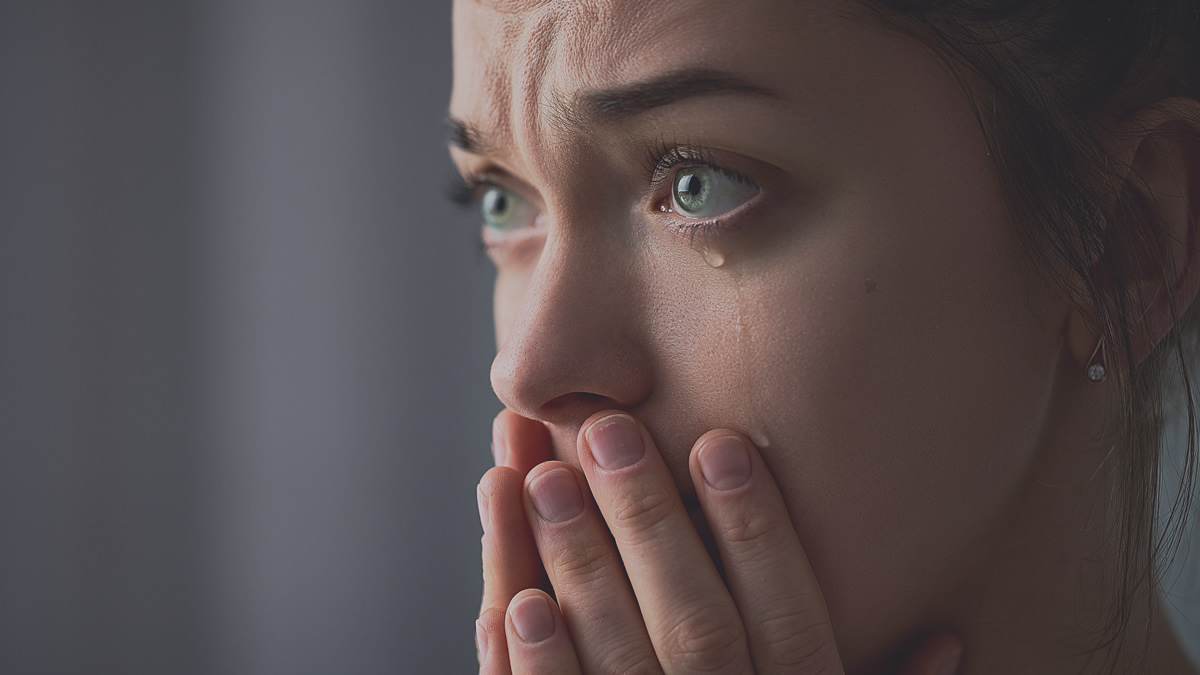
    Crying is still often seen as a sign of weakness, but that’s not the case. In reality, one must be brave to let our worries slip away along with the tears. We are born crying as a sign of vitality, as children we often cry, it is our most effective way to communicate pain or discomfort, or fear. As we grow up we learn to control ourselves, we no longer cry, we hold back. In reality, crying is the most effective way to throw out strong emotions, tension, even joy, and emotion.

    The only ones who cry for emotional reasons are we humans. The birth of crying linked to emotions represented a fundamental evolutionary step in the history of man. One more reason to never be ashamed of crying. We should never block our crying or interpret it as a sign of weakness.

    In many cultures, including ours, crying is considered a sign of weakness. In fact, several studies show that on average men cry once a month. While women cry at least five times a month, especially before and during the menstrual cycle. When crying can increase up to fivefold, often for no obvious reason (such as depression or sadness).

    Various environmental factors that happen to us in life are perceived and reach the deepest areas of our brain. Here they are interpreted and connected to emotions. Even an element already present in our memory or thought can arouse emotions. Intense emotion can activate the tear glands through the vegetative peripheral nervous system, causing the crying.

    Crying in children

    Crying is an important way to communicate before you know how to speak. Babies cry a lot and sometimes understanding the reasons for their crying can be difficult. The first thing to do absolutely is to stay calm. In fact, the child immediately perceives the anxiety and nervousness that often afflict parents exasperated by his crying.

    This doesn’t help but it makes the situation worse. Crying can be a request for attention, especially for contact with the mother. Or it can be a sign of fatigue or over-stimulation.

    It is useful to gently caress him and he will understand that he is no longer alone. Sudden movements should be avoided because they frighten him. Take the baby in your arms gently, but with a firm grip. Babies hate being tossed around, so use both hands – one behind the head, the other under the bottom.

    Rock him, massage him, talk to him. Place the baby in contact with the skin. Turn off the lights, keep the environment quiet. This helps calm you down too. Say reassuring words in a low and sweet voice, hum songs you like, try giving him a bath.

    Crying in adults

    Like children, we adults cry when we are lashed by physical or psychological pain. We cry, for an important loss or for a serious frustration. When anxiety, fatigue or stress are excessive and unbearable. Or to free our soul from worries and troubles.

    Tears of emotion are sweet and welcome when we attend a moving and poignant TV or theatrical show. In the same way, crying is certainly pleased when our emotions are stimulated by intense joy.

    But in our society, crying is a kind of taboo: those who cry are considered weak, without the strength to control themselves, to bear and face reality. It is no coincidence that the only tears tolerated are those of children or, according to a dying stereotype, of women. It is as if we have forgotten how important crying is in certain situations, its power, and the many functions it possesses.

    Crying therapy

    Crying is a natural physical reaction of our body to pain, sadness, fear, and sometimes even joy. If we block this reaction, we cannot fully express our emotions. We must keep in mind that crying is therapeutic, it is liberating, it is a real healing tool. So when we feel that our heart is hurt, we should cry without making too much trouble.

    It helps us to convey emotions, to let them emerge on the outside. These emotions otherwise risk accumulating and making us suffer even more. Furthermore, if we continue to keep our state of mind hidden from people close to us, communicating with them will become increasingly complicated, especially if they are making us suffer.

    Emotions are fundamental in our lives, both when we consider the positive and when they seem negative to us. Sadness is actually important because it allows us to react in the face of suffering and then to better enjoy moments of joy. Trying not to cry and hiding emotions can become a form of self-destruction. It doesn’t matter how heavy the situation we are experiencing.

    When we are suffering, we let the tears flow and thus express our frustration, resentment, anger, anxiety, thoughts that torment us. With a healthy, liberating cry we will drive them away from us. After we cry, we will feel better, everything will be over and we will almost be able to smile at what made us suffer. Crying will make us feel better and with a peaceful soul. We can better make the best decisions for ourselves and move on. After crying, we will feel free and find a smile again.

  • No Contact with the narcissistic person

    No Contact with the narcissistic person

    No Contact after the end of the relationship with a narcissist is the most important rule to respect. Precisely to protect yourself from the manipulation and abuse of the narcissist. There are no exceptions to this rule. No matter how hurt you feel the contact will only make things worse. No Contact means having no contact with the narcissist, in any form.

    • no phone calls
    • no message
    • no email
    • no meeting
    • no Facebook contact
    • no form of cyberstalking

    Nothing good can come of contact with the narcissist, and no matter how seemingly insignificant that contact may appear. In any case, it will affect the process of processing the pain and healing from it, and the victim then always and in any case regrets having made that contact.

    Every slightest form of contact serves the narcissist only to hurt the victim again, since the narcissist’s interest is always and only that of manipulation and triangulation, even when it can be mistaken for real interest.

    When she gives the narcissist this chance, the victim can easily fall back into her charm, only to immediately relive the nightmare of a toxic and harmful relationship. The narcissist will reactivate the idealization phase, bringing the victim back into a state of cognitive dissonance.

    The narcissist will lie pathologically again and involve the victim in a deeply painful relationship, boycotting the entire healing process that has already begun. When the narcissist regains possession of the victim’s access keys, he will immediately re-involve her within her world, made up of manipulation and triangulation.

    No Contact is the most powerful weapon to cancel the narcissist’s effects

    It is essential that the victim breaks this vicious circle, and the only way to do so is No Contact. In this sense, even cyberstalking must be completely avoided as, although it may seem an indirect or light form of contact, it still goes to solicit a state of dependence.

    The only way to stop this addiction, the only way to get out of the pain of this relationship, is to block the narcissist on Facebook, Twitter and other social media and on mobile phones. Nothing can alleviate the pain if not the time and the inner work of elaboration.

    The most effective, if not the only, way through which a narcissist victim can free himself from the toxicity of the relationship is No Contact. Is the most powerful weapon to cancel the narcissist’s effects, although it is very difficult to establish and even more difficult to maintain over time. No Contact is a concept as simple as it is difficult to establish and maintain.

    The first aspect to keep in mind in order to implement the victim’s ability to implement No Contact is to understand what the narcissist needs. Surely it refers to control, power, attention and confirmation, but in reality the narcissist wants only one thing: nourishment, the so-called narcissistic supply.

    Nourishment can be represented by many things: admiring comments, longing looks, a message, a comment on social media, but also angry insults or pleading tears. All of this represents the nourishment of the narcissist. This is why the narcissist chooses not only a primary victim, but also weaves a dense web of secondary relationships that guarantee him nourishment every single hour of every single day.

  • Call angels precious symbol for expectant mothers

    Call angels precious symbol for expectant mothers

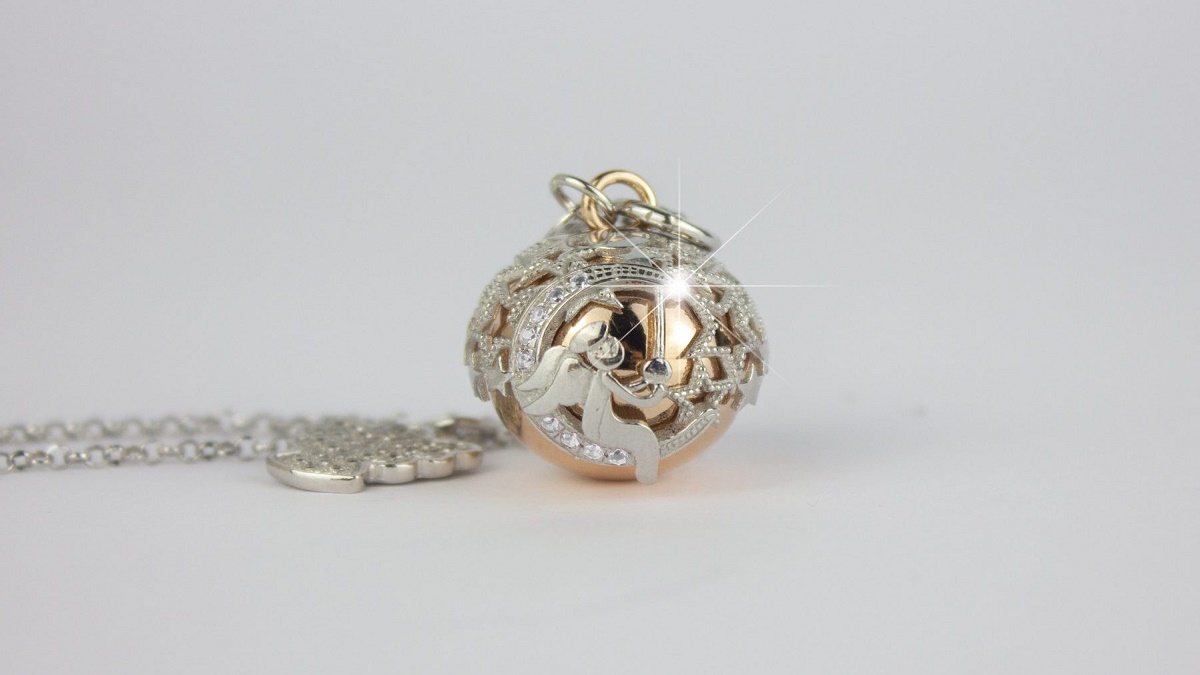
    Call angels is a beautiful pendant, usually spherical in shape, which is worn by women during pregnancy. The Call angel pendant is worn on a long necklace so that it is placed very close to the baby in the baby bump of the expectant mother. This pendant emits a sound that the baby inside the mother’s womb is able to hear, obtaining a feeling of calm and harmony.

    Legend of Call angels

    The origins of this amulet date back more than a thousand years ago. This tradition was born and spread all over the world from two very different and distant civilizations, one in Mexico and the other in Indonesia.

    In Mayan culture, this pendant was known as the -llamador de angeles -. According to legend, the tinkling of the ball, which is unique to each pendant, has the magical ability to invoke the wearer’s guardian angel.

    An ancient Celtic legend tells that when you move your body, the bell rings reminding your guardian angel to take care of you.

    According to Indian tradition, however, it is customary for women expecting a child to hang the tinkling sphere around their neck with a long cord so that the sphere rests right at the navel level. In this way, the guardian angel also takes care of the child who is to be born.

    Call angels meaning

    A pendant used by pregnant women as an amulet to protect their baby. After giving birth, the gentle and familiar tinkling of the bell calms the newborn, helping him to sleep while remembering the sweet warmth and tranquility of the womb.

    After the baby is born, the pendant should no longer be worn by the mother, but hung over the crib or sewn into the baby’s blanket so that it can offer calm and protection in the form of an invisible guardian angel.

    This magical ball, generally made of silver, has a small xylophone inside that creates a special sound when the ball moves. The call angel can therefore be a special gift for a future mother as the sound of her helps to experience pregnancy in a peaceful way.

    Already at the twentieth week, the baby in the womb can feel it. The future mother, carrying it on the belly, makes this sound familiar to the baby who perceives it as calming, before and after birth.

    Nowadays it is not only worn by pregnant women, even if the tradition of origin is that. Call angel has in fact become a kind of spiritual jewel, wearable not necessarily for pregnancy but for protection reasons.

    In fact, many people believe that the sound of the pendant calls angels does not only call an angel for their child, but that it is also able to call their guardian angel. For believers, in fact, the presence of a guardian angel for each of us is a fact.

    For all these reasons, an angel call pendant is a precious gift that you can give to someone, especially for future mothers.

  • Hamsa hand powerful symbol against the evil eye

    Hamsa hand powerful symbol against the evil eye

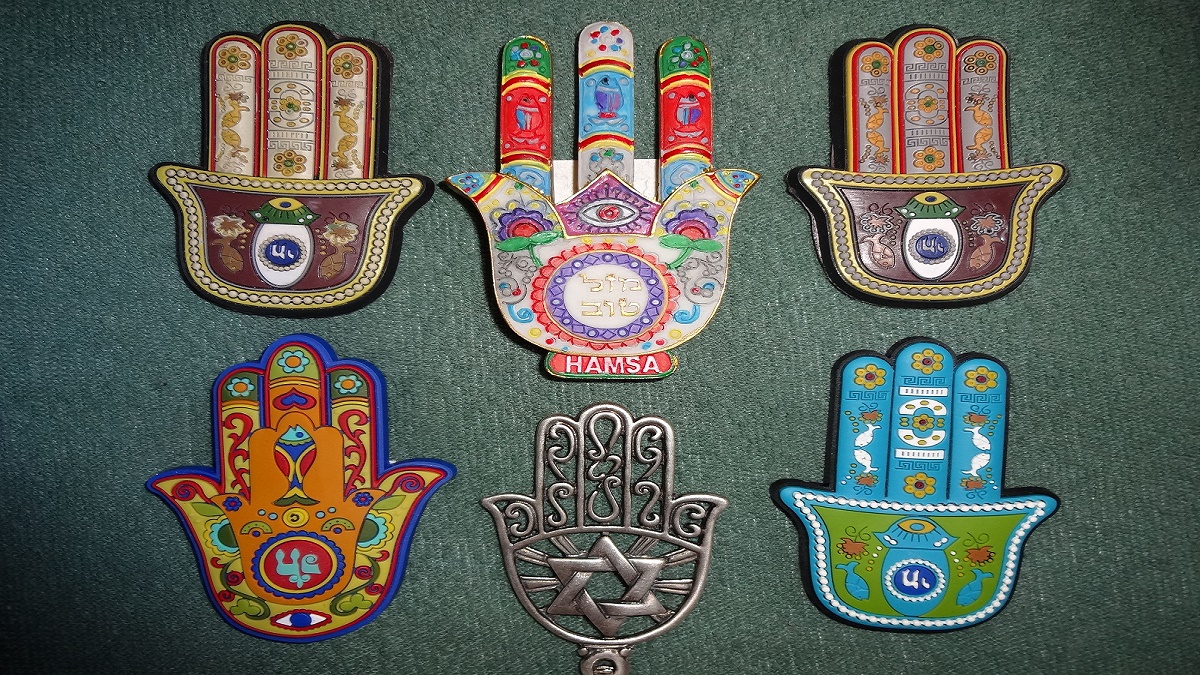
    Hamsa hand powerful symbol against the evil eye, it is in fact one of the most recognizable symbols of all time with religious and cultural significance in many parts of the world. It is a mysterious amulet, worn as a symbol of luck, health, happiness, and protection from evil. The Hamsa hand symbol has many variations but is generally represented by a hand with an eye in the center.

    Hand of Hamsa origin of the name

    Hamesh. The word Hamesh means 5 in Hebrew. Symbolizes the 5 books of the Torah. It also represents the name Heh which is one of the different names of God. Hence the name Hamsa hand.

    Hand of Fatima. This name comes from Islamic beliefs and is named after Fatima, the daughter of the prophet.

    Hand of Mirian. In Jewish culture, the Hamsa is a symbol of the hand of God. It is called the hand of Miriam from the name of the sister of Moses and Aaron.

    The hand of Mother Mary. This name comes from the Christian tradition. It is named after Mary, the mother of Jesus.

    The story of the Hamsa hand

    This symbol is one of the oldest there is and dates back to 18,000 years ago, thus preceding the birth of all current religions. It is believed that the symbol first appeared in ancient Mesopotamia (present-day Iraq) and Carthage (present-day Tunisia).

    It has an important significance for the peoples of the Middle East and North Africa. It is thought to have been created by the Phoenicians who used it as an amulet. Over time it has continued to be seen as protection from evil, particularly the evil eye, a primal fear that exists in almost all cultures.

    Hamsa hand meaning

    The main meanings, which we can find almost all over the world, are those of a protective symbol that brings luck, health, happiness, driving away negative feelings.

    In many cultures there is a superstition that if a person with evil thoughts looks at you, his evil eye can cause negative events to happen to you. By wearing this symbol, according to beliefs, one is able to defend oneself from negative energies.

    The two main styles with which this symbol is depicted are hand up and hand down.

    If the hand is pointing upwards it is a sign against evil. It is representative of protection by rejecting external negativities and your negative thoughts such as envy, hatred and greed. In this case the fingers are drawn open, to provide greater protection.

    If the hand is facing down, it represents abundance and goodness. It becomes a welcome sign that invites and welcomes many positive things into your life. In this representation the fingers are generally drawn close together, as a sign of an invitation to good luck.

    Some hands may not contain it, but generally this symbol is drawn with an eye in the center of the palm. Most of the time the thumb and little finger are depicted identical.

    The meaning in the different religions

    This symbol is found in Christianity, Islam, Judaism, Hinduism and Buddhism. However, the meaning varies depending on the religion.

    Islam

    A distinction must be made according to whether we are talking about Sunni or Shiite Islam. For the Sunnis it represents the 5 pillars of Islam. For the Shiites it represents the five persons of the cloak.

    Hinduism and Buddhism

    According to Hindus and Buddhists, the hand of Hamsa the energy flow of the chakras in your body as well as the five senses and mudras. Each finger of the hand is representative of a chakra and an element.

    Christianity

    This symbol, in the Christian religion, is called hand of Mary as the mother of Jesus. It is true that, in Christianity, symbols other than the cross are generally rejected, but due to the connection with Judaism this symbol is usually accepted. . In the Christian religion, the hand of Hamsa is recognized as a symbol of Mary exalted as a compassionate and loving mother.

    Judaism

    In Judaism the number 5 has sacred connotations. This number is representative of one of the names of God and the five books of the Torah.

    Wear the Hamsa hand symbol

    As we have seen this symbol is full of meanings, some of which are strongly religious, others are universal. Many wear this symbol because of its universal meanings that are.

    A representation of unity, since it is a common thread between all major religions.
    It is a symbol of protection.
    It is a symbol of femininity, as the hand represents various compassionate and strong female figures.
    Given that the Hamsa hand has existed since before the advent of modern religions, we can also see it as a spiritual symbol.

  • Tree of life spiritual and religious meanings

    Tree of life spiritual and religious meanings

    The Tree of Life has many spiritual and religious meanings and can be interpreted in many ways. The beauty of this is that you can find in this symbol a meaning to relate to. The tree of life represents how everything is interconnected.

    Interconnection

    We do not exist in a vacuum or closed in a room with watertight compartments, but we are connected with the world around us. The circular aspect of the symbol represents the world, while the tree represents everything the world contains. It also shows a cyclical structure with everything connected.

    Individuality

    Each tree is unique and has its own characteristics. In fact, at first all trees look the same, but as they grow each tree becomes unique. Over time, trees acquire character and beauty, withstanding all kinds of trials and challenges to stay strong and standing. Like the tree, we too are different from each other and this symbol reminds us of this.

    Fertility and family

    The word tree is often used to talk about the connection with family and ancestors. We say family tree to symbolize the many family ties to various people across generations. A tree is a symbol of fertility as it finds a way to perpetuate itself. The tree of life is also green and luxuriant, all symbols of fertility.

    Calm, peace and relaxation

    There is something about being under a large tree that invokes a sense of strength, peace and relaxation. This is a feeling we rarely get from anything else. A tree is rarely agitated. Rather it is calm and peaceful, gives and nurtures quietly.

    Stability, strength and growth

    A tree is a symbol of stability and strength. We use the metaphor of a tree with roots spreading into the ground to talk about strength, stability and grounding. It also symbolizes growth, as a tree is the result of years of slow and patient growth from a vulnerable sapling to a robust tree.

    Rebirth

    A tree can lose its leaves and appear dead, but when conditions are right, the tree comes back to life with beautiful leaves appearing again. As such, the tree of life symbolizes rebirth and overcoming difficult times. It represents a new beginning, a newly turned leaf.

    The tree-of-life is typically depicted as a large tree with branches and roots extending up and down, respectively, and is contained within a circle. This symbol has links to religion, philosophy, and spirituality and can be traced back to almost all ancient cultures. The idea of ​​the tree of life has existed almost as long as humanity has existed.

    Buddhism

    The Buddhist religion has always revered the Bodhi tree; tree under which the Buddha attained enlightenment. This tree represents the path to enlightenment and, as such, is the symbol of life.

    Christian references to the tree of life in the bible

    Adam and Eve could not eat from the tree of life, which would allow them to live forever. This tree is often seen as a representation of God’s love. In the book of proverbs, the writer connects the tree of life with wisdom.

    Celtic tree of life

    In Celtic culture are often represented with branches reaching upward and roots extending deep into the ground. It is a representation of the Druidic belief of the connection between heaven and earth. The Celts believed that trees were human ancestors, with trees even holding the gates to other worlds. The Celtic tree of life is the most popular tree of life symbol in Western countries.

    For the ancient Celts was a symbol of balance and harmony. Trees in general are an integral part of Celtic beliefs and cultures, with the tree of life being of great importance among them. Celtic culture is a representation of how the forces of nature combine to create balance and harmony.

    This idea can be explained through the image of a forest: in it several trees combine together to give it life, moreover their united strength provides hospitality and food to the living beings who live there. Furthermore, the branches and roots of these trees grow both deep in the ground and towards each other, just as the forces of nature are widespread and strong.

    In addition to representing balance, harmony, and cooperation in nature, this symbol also has other meanings in Celtic culture.

    The tree also represents long life and wisdom, as it is known that many forest trees have a very long life and see a lot of things happen during their existence. Furthermore, the tree represents the cycle of the seasons and rebirth, passing from losing its leaves in autumn to a new budding in spring.

    The Celts finally thought that this tree connected the upper and lower worlds through its roots and branches, for this reason, it was a connection tool that allowed you to speak with the gods.

    Ancient egypt

    In ancient Egypt, it was believed that the tree of life was a symbol of both death and abundance. Furthermore, with its branches reaching towards the sky and its roots towards the underworld, the tree of life symbolized the center of the universe.

  • Karma stabilizing force between past, present, and future

    Karma stabilizing force between past, present, and future

    Karma is part of us in our existence, and by existence, I don’t mean the life we ​​are living today, but past, present and future. For each action, there is an equal and opposite reaction that serves to restore balance. Every action we take has repercussions on our life that are determined by karma.

    Karma is not our destiny, but it is what we do not see with the conscious part, they are emotions, traumas, that we do or suffer that are not fully understood. Put simply, every good or bad deed we do will have inner effects. When we consciously understand the emotion in us and in the other, integrating it into all three aspects, body, mind, soul. One has, the state of consciousness.

    So we objectively find an inner balance, we burn karma and the benefits on life are to become conductors of one’s existence, on the soul. The benefit is to be lighter that you no longer need to incarnate. Continuing the path in higher dimensions.

    Every evil or loving action that is not understood, what it causes in the counterpart and in us, creates in our life effects of incarnation between victim and executioner. Karma takes shape based on what is held inside, emotions, traumas, everything that is not understood.

    Which unconsciously conditions our choices and actions and manifests itself in the attraction of events, changes, people, which will make us relive in a game between the executioner and the victim. Wanting to see the thing from a scientific point of view we say that it is comparable in physics to the law of action and reaction.

    Therefore, every decision we make about unconscious emotion deeply marks what surrounds us and heavily influences our way of life. Because we receive a reaction corresponding to the intensity with which our actions influence what is around us. Karma is not positive, but neither is it negative, it is a stabilizing force, which finds its center of gravity in the balance of things.

  • Patience needs to be trained and improved, 5 tips

    Patience needs to be trained and improved, 5 tips

    Patience is something that needs to be trained and improved, rediscovering some important values ​​and elements, which have often been lost. The watchword of our time is frenzy, that is the continuous race towards time and the desire to reach or have everything immediately, correlated by infinite emotions and experiences. You are no longer able to wait and every moment without activity appears as wasted, empty and useless time, which must be filled.

    This condition largely derives from the context in which one lives and from the education received. However, very often it is something inevitable because the requests from the outside are many and the time never seems to be enough, so the race is on the agenda. Waiting causes a series of sensations including anger, frustration, a sense of worthlessness, and dissatisfaction, up to the sense of guilt for lost time, as well as the anxiety of how to recover it.

    Patience, learn to savor the here and now

    Impatience often comes from the difficulty in listening to one’s feelings and experiences in the here and now, especially if they are unpleasant such as frustration, boredom, and anger. However, learning to live in the present moment, and welcoming the things around you, a thousand opportunities of an empty moment, is something important to improve your patience and not get overwhelmed by anxiety.

    Every moment is important and can give something, so wait for things to happen at their own pace, living every moment as something important. One way to start is to learn to listen to your breath, focusing your attention on it, so as to reduce the state of activation of impatience and at the same time shift the focus of your mind. Performing this exercise even away from the moments in which a wait is required allows you to improve its execution and effectiveness.

    Resize expectations

    Another obstacle to patience is expectations. This especially in a broader vision and not limited to everyday events. What is expected of life and the conditions in which we live, family, work, friendship, often goes beyond what reality can offer or give at that precise moment. Expectations do not often allow us to see how things really are and therefore to realize the goals achieved, the skills acquired, and what has been built.

    A closer look will allow us to understand what can be achieved and what not and in what times, so as to reduce impatience and negative experiences in the face of waiting, sometimes of something that cannot be in the here and now and maybe not even. in the future. It does not mean giving up dreams or hopes, but reviewing them in the light of external reality and possibilities, so as to achieve things in the short term, improve one’s feeling of effectiveness and make the wait less exhausting, because the goal appears closer.

    Set realistic goals

    It is good to learn to build goals that are achievable, starting from the analysis of the current condition, resources, and limits. In this way, the work to achieve them will be targeted and the energies well channeled, so as to reduce the wait and reach the goal at inappropriate times. Patience develops in learning to manage the different steps to get to what is desired, without the frenzy of doing too many things and maybe badly, chasing unrealistic and too big goals, but doing few things, well and with awareness.

    Do not judge

    Judgment towards oneself and towards others is another great enemy of patience. Specifically, it often happens that waiting or doing things more calmly, makes you feel incapable, inactive, and not very productive, triggering a series of negative judgments about yourself, which have few functional effects. Learning to be more indulgent with yourself, allowing yourself the opportunity to take time, to experience moments of calm and tranquility without judging yourself, is a good way to increase patience and improve.

    Slow down and plan

    Even planning and setting priorities allow you to learn to wait. Understanding what can wait and what needs to be done right away is in fact a way to reduce the frenzy and give yourself time. So everything has its own time and can be done with calm, patience, and attention, waiting for the moment to do the rest, already fixed and well defined. In this way, all moments acquire a sense and the feelings of uselessness and dissatisfaction are reduced.

    Planning also allows you to slow down and understand if the countless rushes, nervousness and constant inability to wait are really useful, or take you away from the true ability to live and savor things. Too often, in fact, we are focused on the future and we lose sight of the beauty of the present and of the goals achieved, not perceiving them satisfactory enough.

    We should learn from Nature. it cannot anticipate or shorten the growth of plants, the seasons, the constant and meticulous work of some animal species that take care of their work of art with patience and dedication (the beehive, the cobweb, the anthill, etc. ), the passing of the day, but also the birth of a child, however, it is constant in its becoming, and always projected towards the future, but with patience and the ability to wait for the succession of events.

    It does not mean living passively and letting things flow as they come, but learning to live them fully, giving meaning to even the simplest wait such as that at a traffic light or an office, understanding that it is still time available and it is up to us to make it. productive.